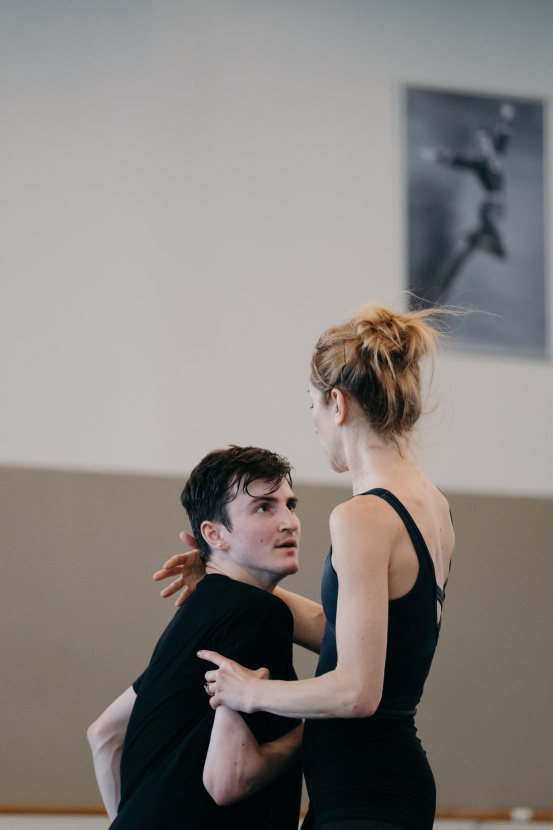
Behind the scenes with dancers Jennifer Stahl and Parker Garrison
The story of Pandora is one of the oldest myths in Greek tradition, created as a cosmogonic explanation—a story to account for why suffering, disease, and misfortune exist in the world. Pandora is, in essence, a beautiful trap—Zeus’s revenge on humanity for the theft of fire by Prometheus.
Prometheus warns his brother Epimetheus never to accept a gift from Zeus, knowing the god’s vengeful nature. But when Pandora is sent to earth by Zeus, Epimetheus is so dazzled by her, he forgets his brother’s warning and accepts her as his wife. This is the crux of his role as representing human nature—and our inability to anticipate consequences.
In the story, Zeus has given Pandora a large jar and told her not to open it (it contains all the evils and miseries of the world). When Pandora’s curiosity gets the best of her, she opens it anyway and everything inside escapes—leaving only Elpis (Hope) trapped inside when she shuts the lid again.
Their union is tragic: Epimetheus and Pandora only understand their mistakes after the jar is opened, and the evils have already been released into the world. It’s a tale for all time and becoming these characters was a weighty prospect.
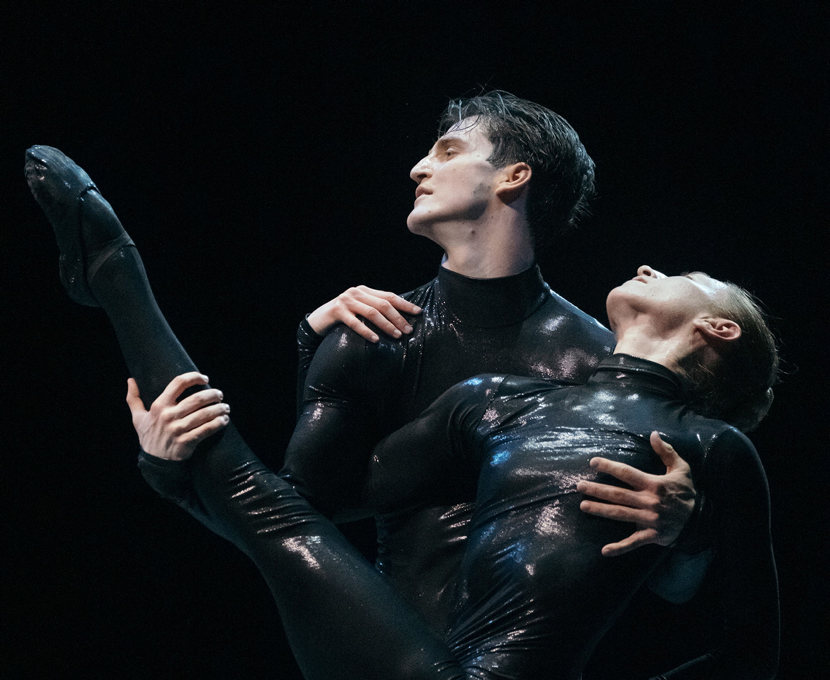
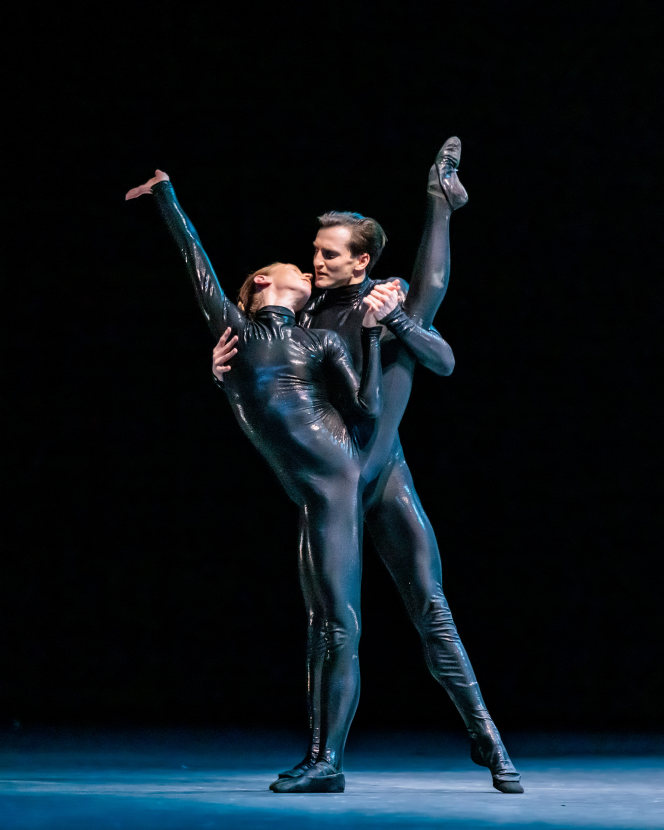
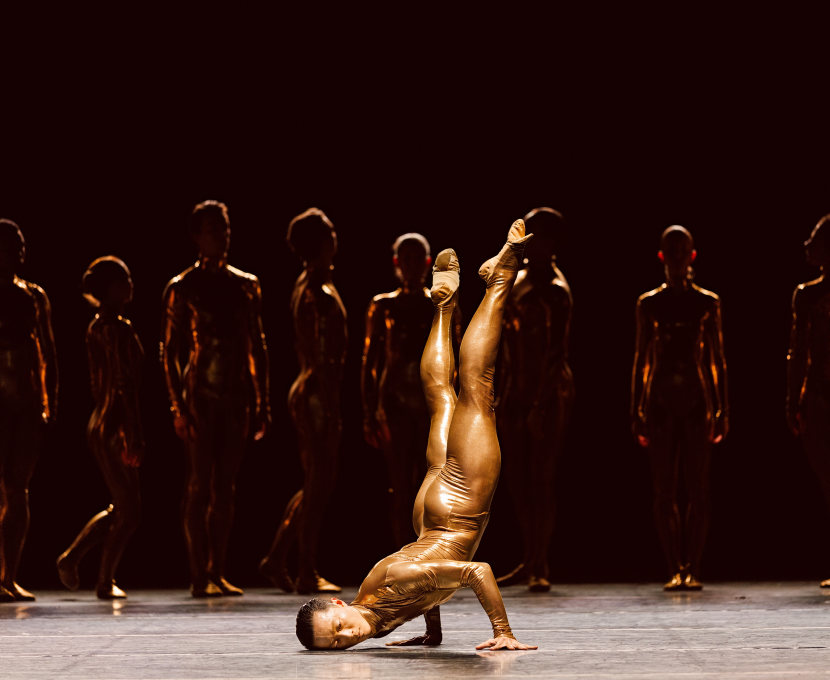
During rehearsals for Mere Mortals, dancers Jennifer Stahl and Parker Garrison step into the roles of Pandora and Epimetheus with the guidance of choreographer Aszure Barton.
In conversation, Stahl describes Pandora as a Mother Nature figure; an all-encompassing being with complex, layered emotions she remains unshaken by. In Greek mythology, Pandora can mean “All-gifted” or “All-giving,” fitting for a being created by all the gods.
Garrison characterizes Epimetheus as having a youthful energy, reflecting his role as the younger brother to Prometheus. He possesses a careless fearlessness. This quality mirrors Pandora’s, which creates a dynamic between them charged with risk.
A fundamental moment in Mere Mortals is the lengthy pas de deux between Pandora and Epimetheus, which takes place towards the end of the ballet. Stahl and Garrison describe it as something beyond a romantic duet, the unearthing between two valiant, curious characters. What begins as discovery deepens into something unfiltered, genuine, and sensual, their movements natural, raw, and rooted in mutual trust.
Stahl reflects on Barton’s guidance during the pas de deux. “Aszure talked about taking each moment and breathing through it with each other. We have moments where we whisper something into each other’s ears. Aszure told us to whisper something different every show.” This intimate ritual allows the dancers to reconnect in real time as they move together on stage, feeding off one another and grounding the relationship in something spontaneous and alive.
Just as Aszure Barton guided these dancers on a journey in the studio, the full production of Mere Mortals takes audiences through a transformative experience. A journey that inspires reflection on curiosity, responsibility, and the fragility between progress and consequence, and the bittersweet nature of hope—the one thing that remains in the jar, perhaps humanity’s only consolation.