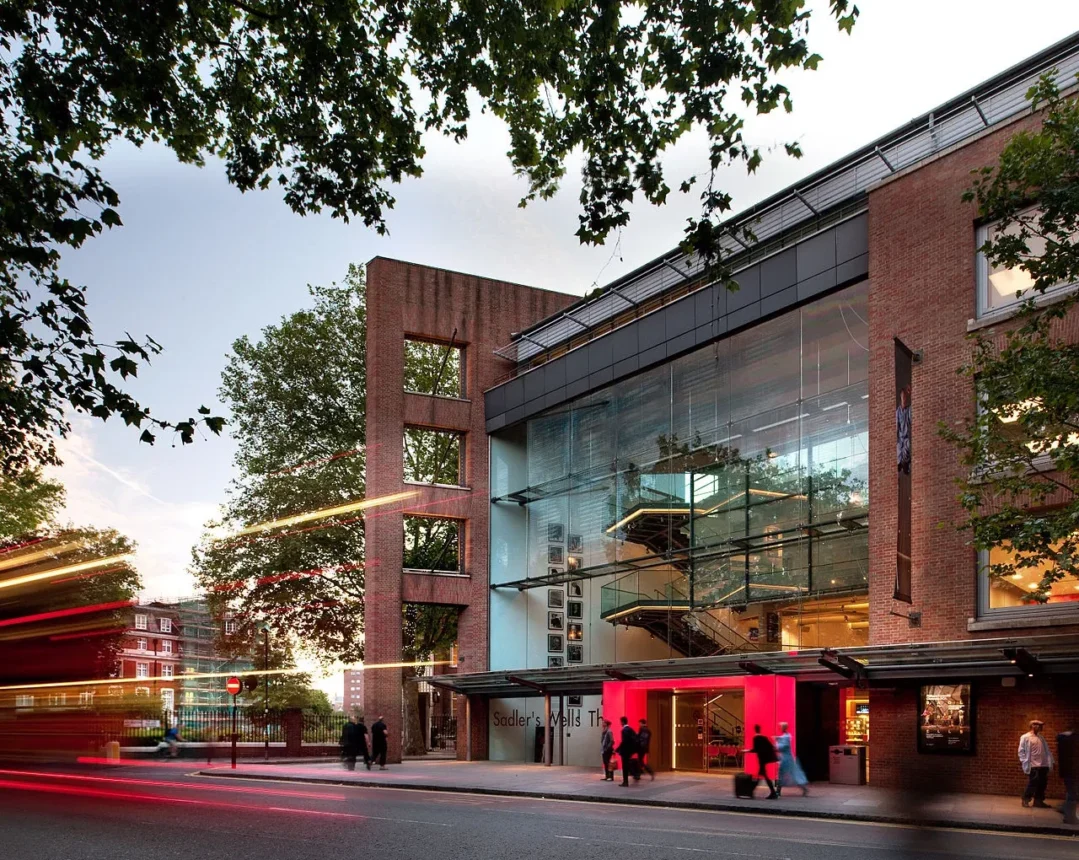
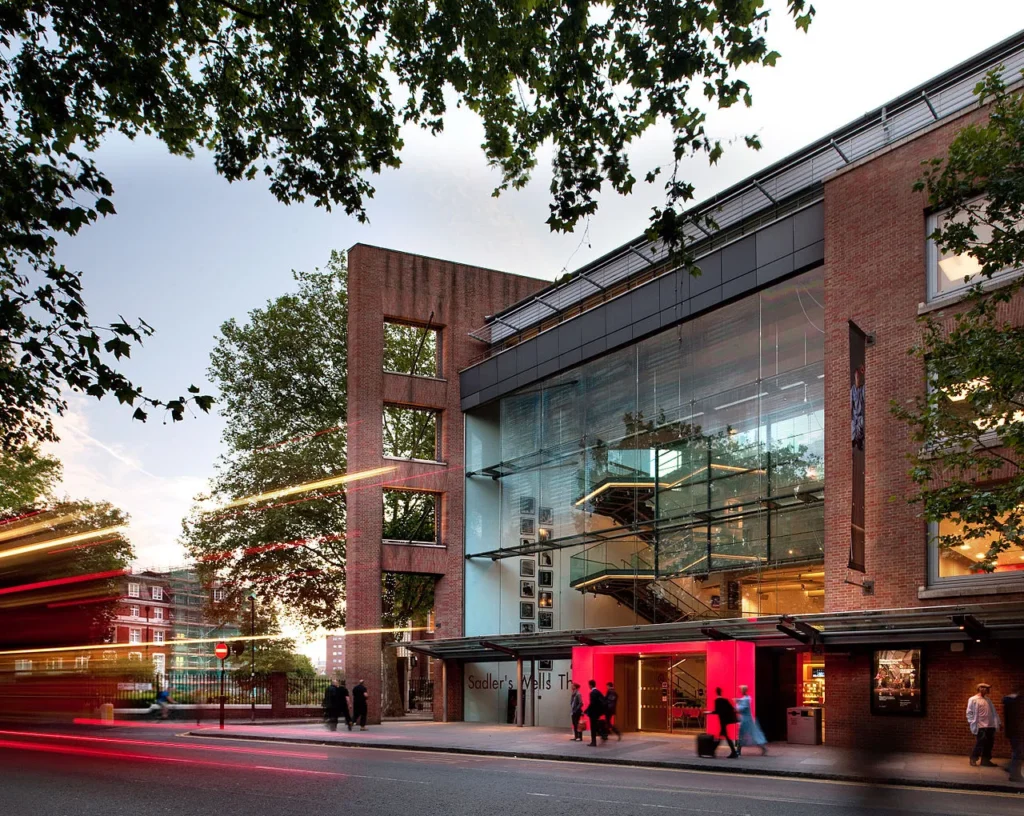
The exterior of Sadler's Wells Theatre in London // Public Domain
SF Ballet returns to the birthplace of British ballet with Mere Mortals
Sadler’s Wells Theatre in North London has lived many lives across its 340-year history. The site has held a cinema, a roller-skating rink, carnival acts, opera, and even an enormous water tank for staged naval battles. Today, it is widely regarded as the birthplace of British ballet, a world-class institution that commissions and presents more dance than any other theatre.
This September, San Francisco Ballet returns to Sadler’s Wells for the first time since 2019 with Artistic Director Tamara Rojo’s inaugural commission for the Company, Aszure Barton and Floating Points’ Mere Mortals. It will be SF Ballet’s second and final stop on its UK tour, following the production’s European premiere at the Edinburgh International Festival. Floating Points’ original score will be performed live alongside the Royal Ballet Sinfonia for the September 9–12 performances.
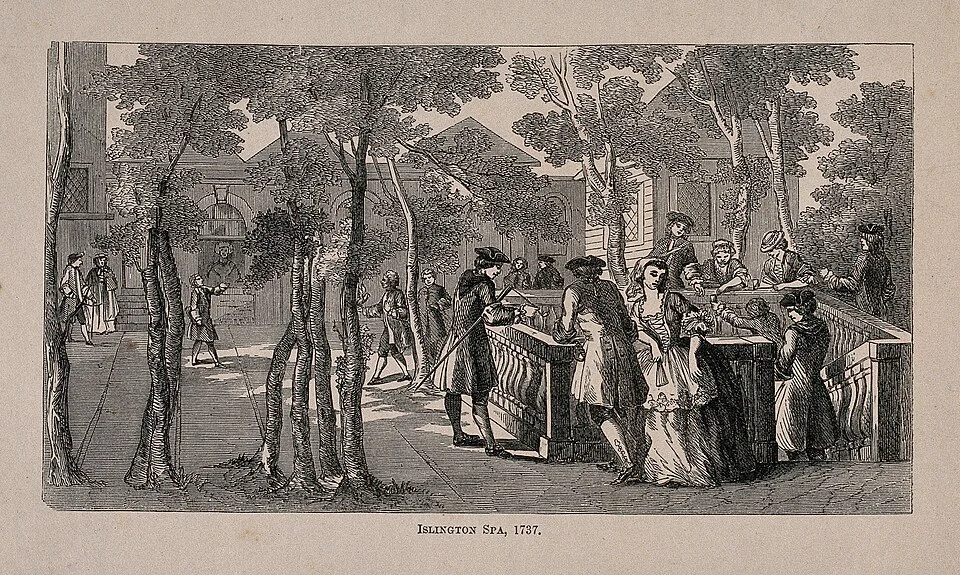
Sadler’s Wells began in 1683 as a music house built by Richard Sadler, who discovered mineral springs beneath the garden of his property. Sadler promoted the waters for their supposed healing powers, drawing crowds of people who drank from the springs while listening to live music. Over the centuries, the theatre cycled through periods of success and neglect, surviving multiple closures and rebuildings. Few would have predicted it would become the first permanent home for English ballet.
In 1926, Sadler’s Wells was reconstructed as a theater for opera and dance. Five years later, Ninette de Valois formed the Vic-Wells Ballet there, laying the foundations for The Royal Ballet and Birmingham Royal Ballet. With choreographer Frederick Ashton, she built a repertoire blending classic ballets with new British works. Renamed Sadler’s Wells Ballet in 1939, the company continued performing through WWII, further cementing the theater’s legacy. Dance critic Clive Barnes later compared its importance for British dance to that of the Ballets Russes for Europe.
Wood engraving of Sadler's Wells, as it was in 1737, with fashionable water-drinkers // Public Domain
Tamara Rojo knows the stage well. She spent more than 15 years as a principal dancer at English National Ballet—a company founded by former Sadler’s Wells principal dancers— and a decade as its artistic director. During her tenure, Rojo formalized ENB’s association with Sadler’s Wells and staged ambitious new work there, including her commission of Akram Khan’s reimagining of Giselle, which experienced a sold-out run. Additionally, she commissioned and premiered Annabelle Lopez Ochoa’s Broken Wings at the theatre. The role of Frida Kahlo was created specifically for Rojo, making Sadler’s Wells the stage for one of the signature roles of her later career as a dancer-director.
This time with SF Ballet, Rojo brings another daring work to Sadler’s Wells. Drawing on the myth of Pandora to explore the risks of humanity’s ambitions, Mere Mortals features AI-informed scenic design by Hamill Industries. Born in a city at the forefront of AI, the production feels at home in a theatre with a long tradition of embracing what comes next.
SF Ballet at Sadler’s Wells London, UK September 9–12, 2026