Skip to content

Your Ultimate Guide to A Midsummer Night’s Dream

Sasha De Sola and Esteban Hernández in Balanchine's A Midsummer Night's Dream // Choreography by George Balanchine © The Balanchine Trust; Photo © Lindsay Thomas

Woodland creatures, fairyland foibles, a little Mischief, and a lot of magic

What Is It? A Shakespearean favorite making its return to San Francisco since 2024. This 1962 work by George Balanchine is set to music by Felix Mendelssohn and was Balanchine’s first original full-length ballet quickly hailed as a masterpiece. Balanchine loved the original play—he could recite large parts of it in Russian—and the ballet sticks closely to its inspiration, telling the story of four lost lovers in the woods and the royal fairy court made up of Queen Titania, King Oberon, and mischievous Puck.

In Short: Adventures and misadventures. Mischief and magic. Woodland creatures and fairyland foibles.

Who’s It For? Anyone who loves high fantasy, the purity of Balanchine choreography, or is a sucker for elaborate weddings.

What Will I See? Our story opens in an enchanted forest outside of Athens on Midsummer Eve.

ACT I

The Plot: The ballet quickly introduces three main groups of characters. First up, the fairies: Puck, the mischievous sprite, and Oberon and Titania, the King and Queen of the Fairies. Oberon and Titania are trapped in a battle of wills over who gets to care for a charming changeling child.

Next, we meet the inhabitants of Athens: Hermia and Lysander, a couple deeply in love; Demetrius, who also loves Hermia; and Helena, who is in love with Demetrius. We also briefly meet Theseus, the Duke of Athens, and his fiancée Hippolyta, the Queen of the Amazons, as they consider Hermia and Lysander’s plea for permission to marry despite Hermia’s father’s objections. When their request is denied, the lovers flee into the woods, followed by Demetrius and Helena.

Finally, we encounter Bottom, a weaver, and his friends, also wandering the forest on this midsummer night.

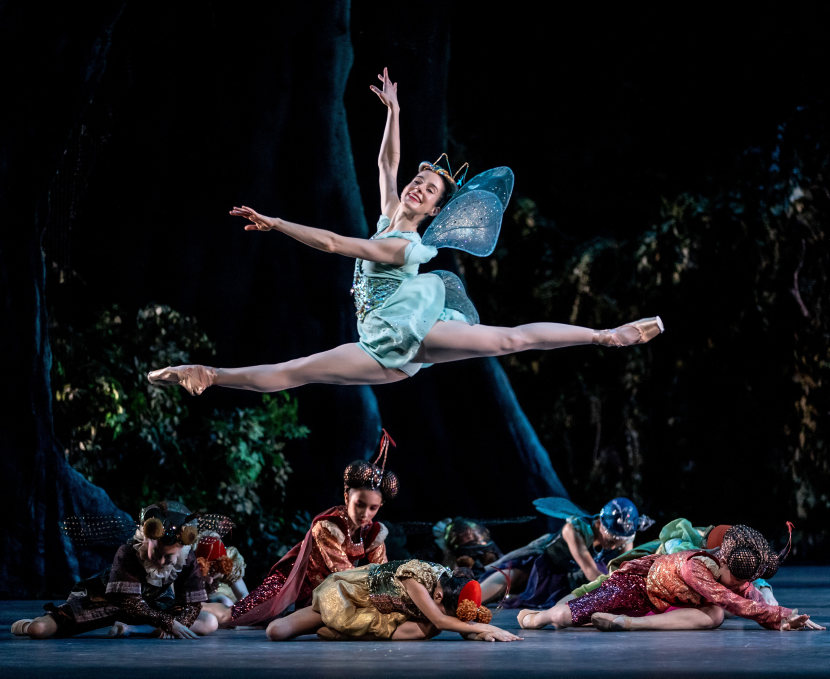
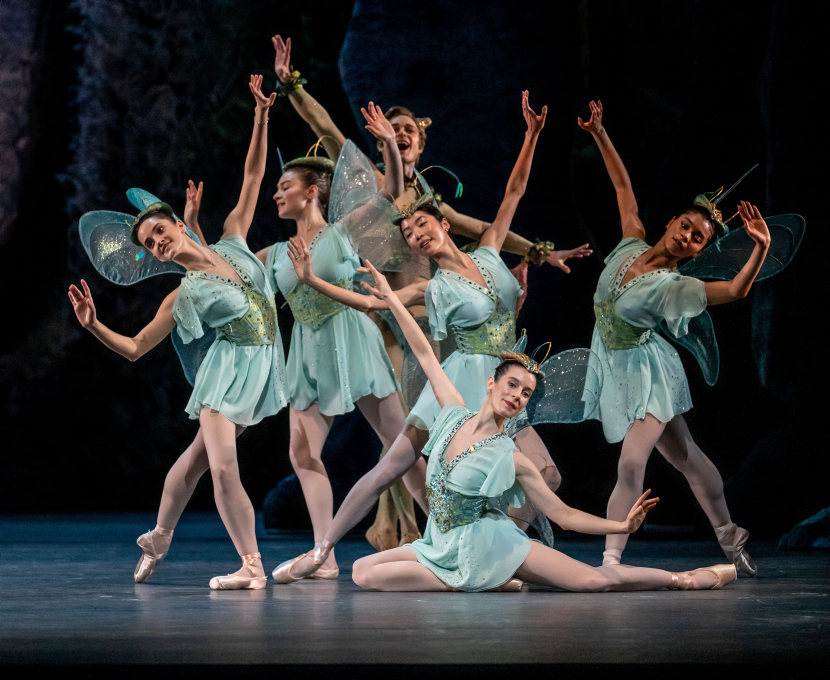
San Francisco Ballet in Balanchine's A Midsummer Night's Dream // Choreography by George Balanchine © The Balanchine Trust; Photo © Lindsay Thomas

As if there wasn’t already enough conflict, Oberon decides to both help out the human lovers and get back at Titania. To do so, he has Puck bring him a flower pierced by Cupid’s arrow. Why? When someone is touched by this flower, they fall in love with the first person they see upon waking. Oberon instructs Puck to make Demetrius fall in love with Helena and to play a trick on Titania.

But of course, it isn’t that simple. First, Puck accidentally anoints Lysander instead of Demetrius, causing Lysander to fall in love with Helena. Attempting to remedy the mistake, Puck anoints Demetrius as well. Now, instead of Lysander loving Hermia and Demetrius pursuing her, both men are hopelessly in love with Helena, confusing and upsetting the entire crew.

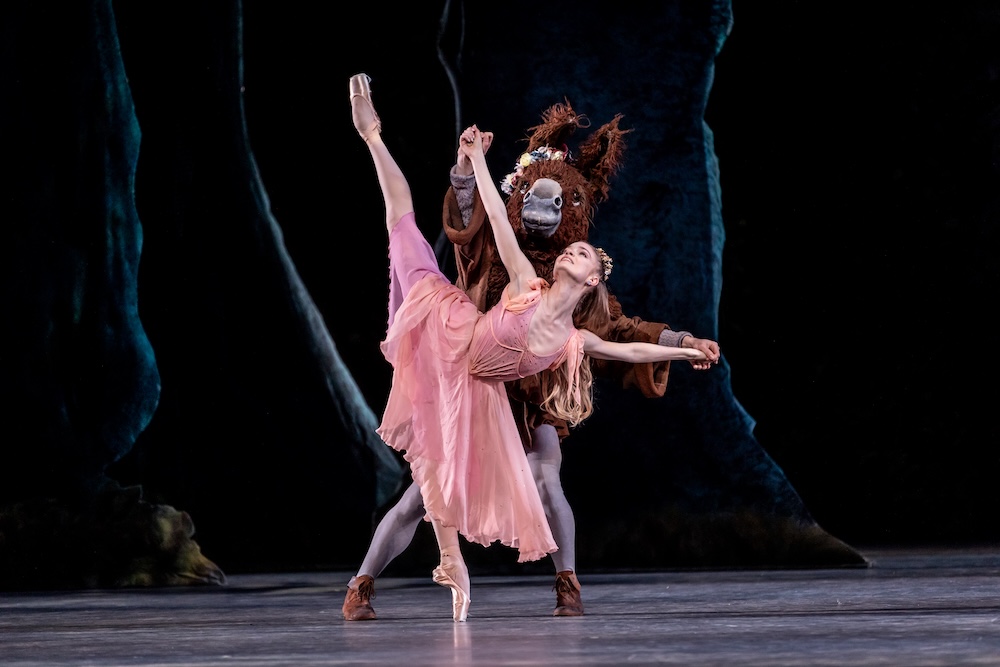
Meanwhile, Puck separates Bottom from his acting group and transforms his head into that of a donkey. (Yes, he’s making an “ass” out of him. Shakespeare’s clever like that.) He places the donkey-headed man near Titania’s bower and douses her in the enchanted flower dew. When she awakens, she falls hopelessly in love with the ass. Oberon shows up just in time to release her from the spell, at which point she’s embarrassed enough to make up with her husband.

As the night wears on, the human lovers eventually exhaust themselves fighting and fall asleep, giving Puck a chance to set the pairs right. Theseus and Hippolyta (accompanied by her hounds) find the couples and awaken them. Now that everyone’s paired off correctly, Theseus declares it’s time for a triple wedding.

What Should I Look For? The entire plot (five acts in the original play) is condensed down into this single act, so a lot of what you’re looking for is simply keeping track of who’s who! There are a few key dance moments too, especially for the fairies.

Notice that Titania and Oberon never dance together. Instead, Titania dances with a nameless cavalier in a pas de deux that is full of long, elegant lines, and, of course, with Bottom in what must be the funniest pas de deux ever choreographed! Oberon, meanwhile, has a solo full of quick jumps and what we call “batterie,” small beats made with the feet while in the air. This is one of the hardest solos that Balanchine ever choreographed, so don’t miss it!

Finally, keep an eye on Puck, who moves with quicksilver lightness throughout the ballet. Created on Arthur Mitchell, the role became a defining one of his career.
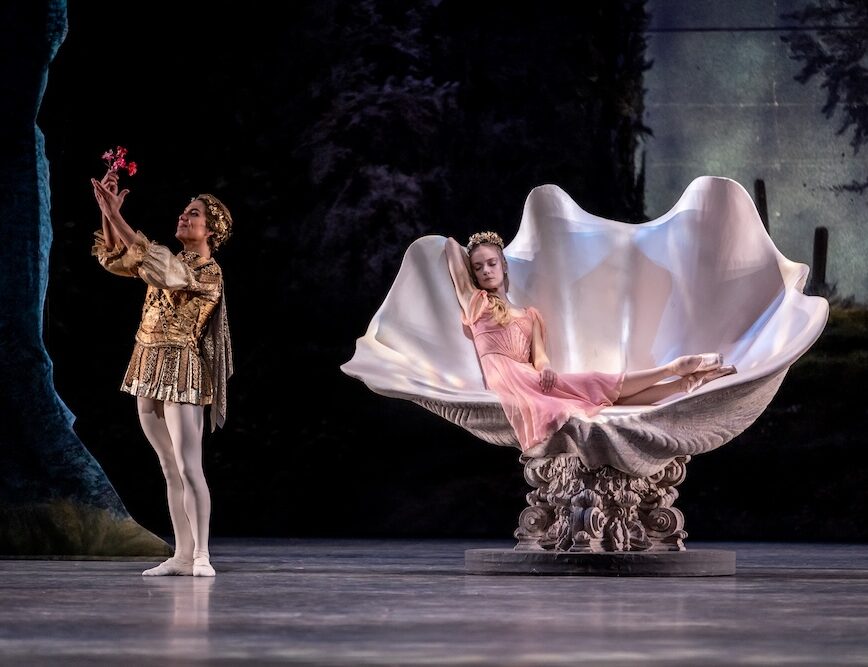
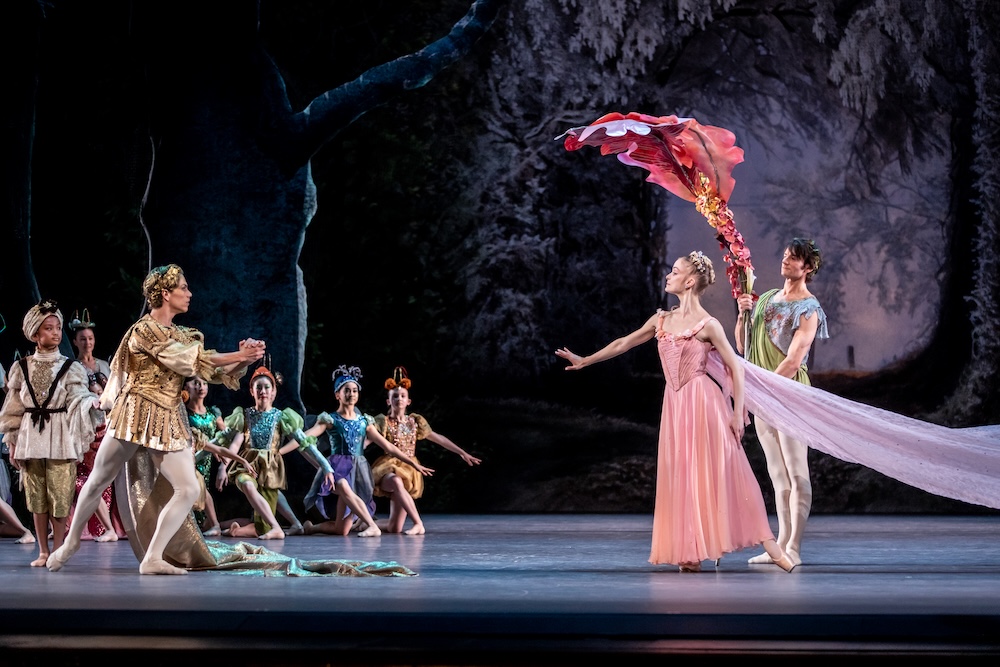
Sasha De Sola and Alexis Francisco Valdes in Balanchine's A Midsummer Night's Dream // Choreography by George Balanchine © The Balanchine Trust; Photo © Lindsay Thomas

ACT II

The Plot: With all the plot in Act I, that leaves… a wedding, of course, for Act II! A triple wedding, that is, as Theseus and Hippolyta, Helena and Demetrius, and Hermia and Lysander all tie the knot.

Katherine Barkman and Myles Thatcher in Balanchine's A Midsummer Night's Dream // Choreography by George Balanchine © The Balanchine Trust; Photo © Lindsay Thomas

After the wedding entertainment ends, we return to the forest, where we see our reconciled King and Queen of the Fairies. Puck—who brought us into this forest scene—closes out the ballet, as he does the play: “If we shadows have offended, think but this, and all is mended, /
That you have but slumber’d here while these visions did appear… So, good night unto you all. / Give me your hands, if we be friends, /And Robin shall restore amends.”

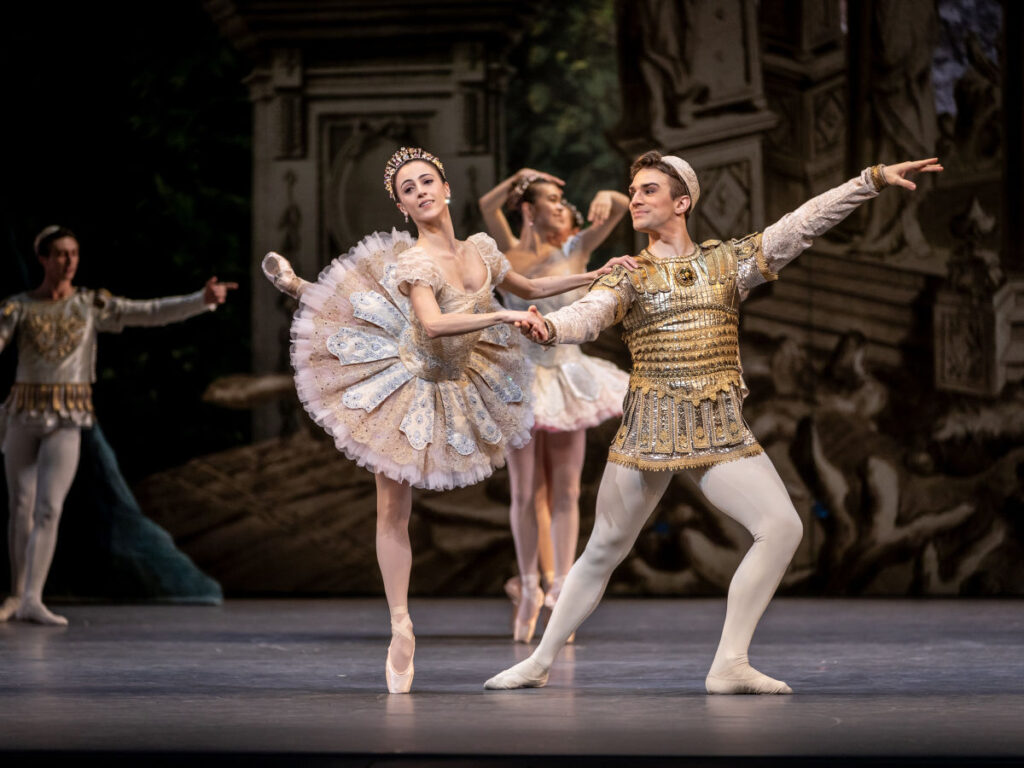
What Should I Look For? This act hinges on the Divertissement pas de deux, in some ways, an odd moment when Balanchine inserts an entirely new couple into the action to dance together at the wedding. This duet seems to show everything that the other couples in the ballet don’t have: decorum, grace, equality, mutuality, and respect. Low lifts—never above the shoulder—and careful handholding create a sense of ease and intimacy. A final sweeping backbend suggests a gentle fall into perfect love.

A Midsummer Night’s Dream is onstage Mar 19–27