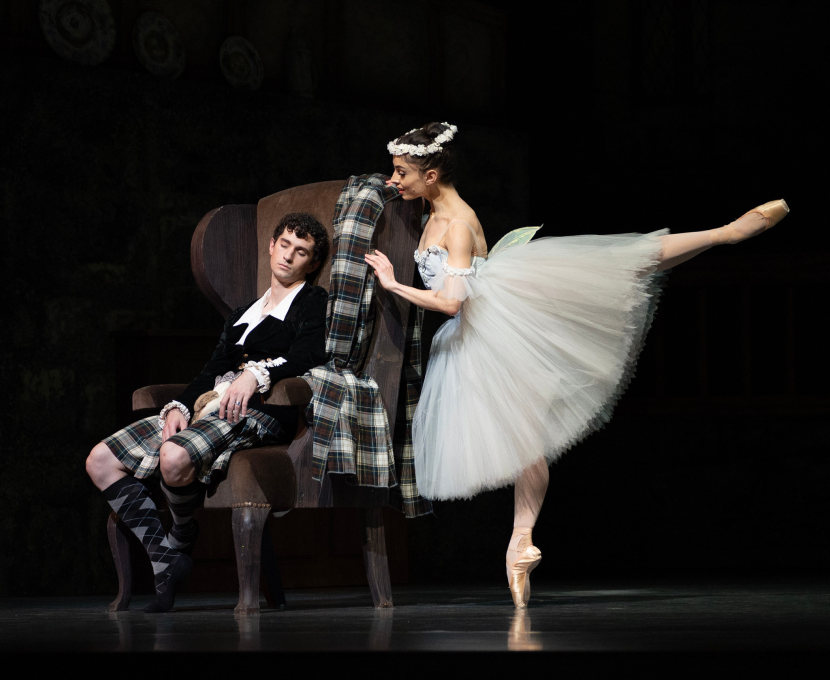
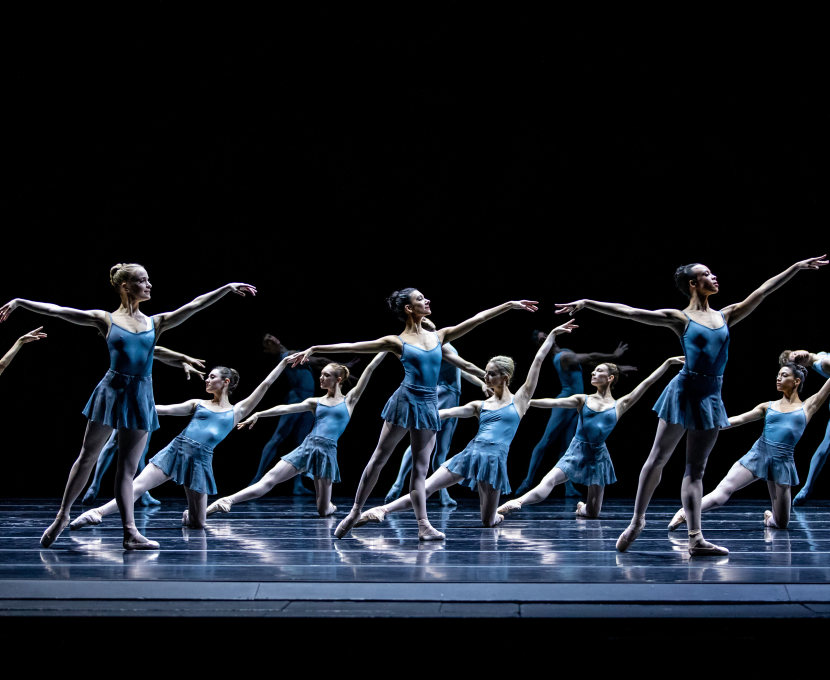
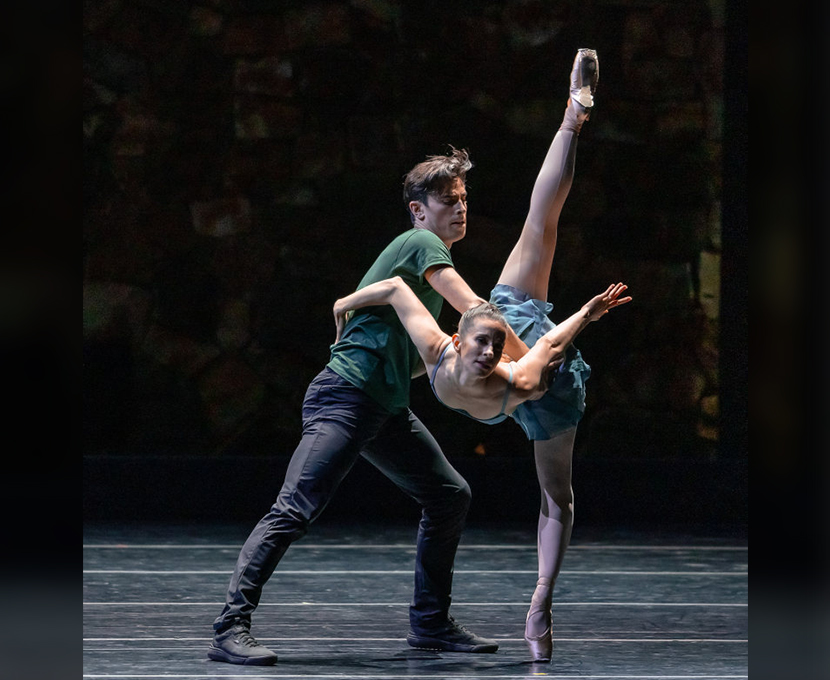
“It’s so human, this story,” says La Sylphide Stager and former SF Ballet Principal Dancer Ulrik Birkkjaer. The existential dilemma at the heart of La Sylphide—a stable, predictable path through life or an exploration of imagination and adventure?—is as relevant now as it was when the ballet premiered in the 1830s. “Should I move to Hawai’i and open a farm and live off the Earth?” imagines Birkkjaer. “Even if you’re in a good place with your marriage, your job, and your family, there’s still that question—what if I just ran off to Paris?”
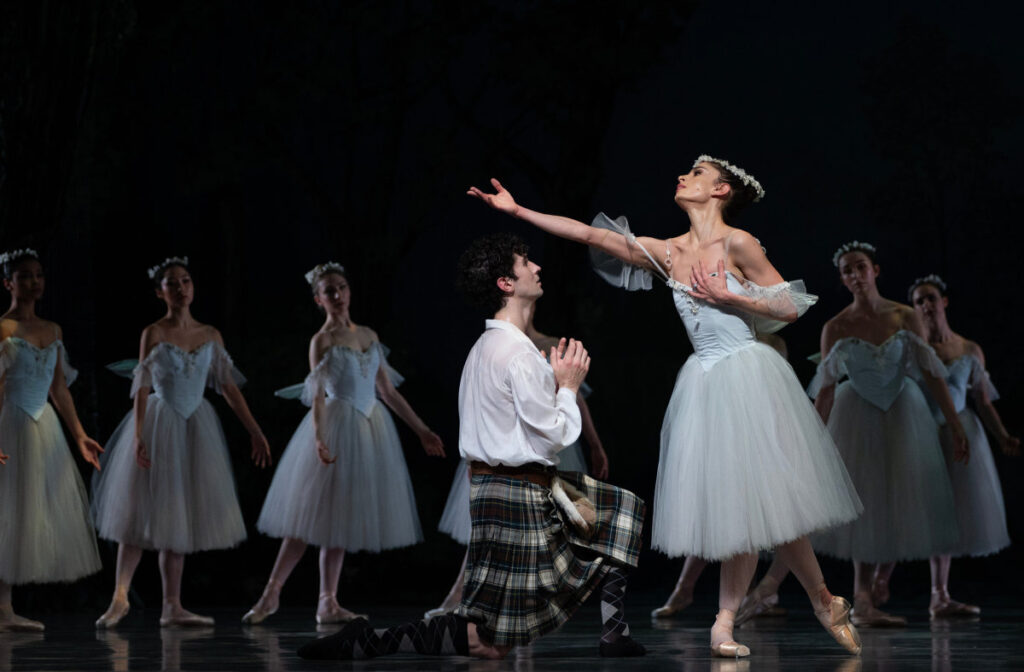
It is this dilemma that brought La Sylphide its initial popularity and placed it squarely in the Romantic era. The ballet follows Scottish farmer James, who is enchanted by a Sylph—a beautiful, mystical being, a spirit of the air invisible to all but him. When she appears at his wedding and snatches the ring from his hand, James turns his back on a future of domestic bliss to follow the creature into the woods. This story struck a nerve in its 1830s French audience. The post-revolutionary generation found a spiritual emptiness in the rationalism of the Enlightenment and the scientific advances of the Industrial Revolution. The Sylph was a lightning rod for the disenchanted, an embodiment of the desire for an idealized escape from the predictability of everyday into passionate emotion and spontaneity.
The first production of La Sylphide had a scenario written by tenor Adolphe Nourrit, loosely based on Charles Nodier’s fairy tale “Trilby, or the Imp of Argyll,” in which a Scottish fisherman’s wife is wooed by a mischievous demon. For the ballet, Nourrit reversed the genders, making the seductive muse female. It was the start of a wave of change in the art of ballet, with women taking over the central roles—the ascent of the ballerina.
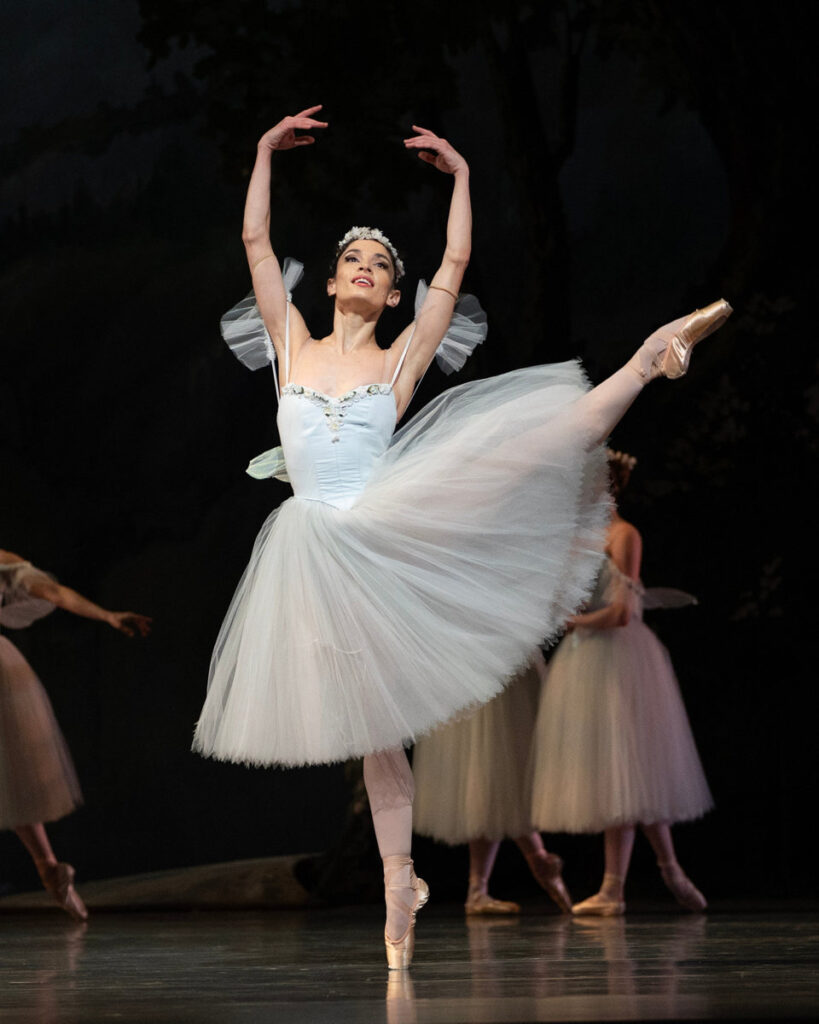
Filippo Taglioni choreographed La Sylphide for Paris Opera Ballet with his daughter Marie as the Sylph. Marie Taglioni wasn’t the first dancer to dance on pointe, but she was the first to use it as an expression of character: the Sylph as an otherworldly being who stepped so lightly she barely seemed to touch the floor, hovering between earthbound and ethereal. Taglioni also shortened her skirts to mid-calf to show off her footwork, and the Romantic tutu was born. La Sylphide made Taglioni the toast of Paris and one of the first international stars of ballet. She had such obsessive fans that a group of them reportedly purchased, cooked, and ate a pair of her pointe shoes.
Danish choreographer August Bournonville traveled to Paris to see La Sylphide and decided to bring it to the Royal Danish Ballet. When Paris Opera’s price for Jean-Madeleine Schneitzhoeffer’s score was too high, Bournonville commissioned new music from Herman Severin Løvenskiold and choreographed his own production. Bournonville’s La Sylphide premiered in Copenhagen in 1836 with his protégé Lucile Grahn in the title role and Bournonville himself as James. While Filippo Taglioni’s version fell out of the spotlight a few years after it premiered, Bournonville’s La Sylphide has been a part of the Royal Danish Ballet’s repertory ever since.
For his production, Bournonville danced the role of James, and shifted the focus from being primarily on the ballerina back to a shared spotlight between James and the Sylph. The choreography for James features the steps that suited Bournonville’s own virtuosity: leaps, beats, and turns. He also emphasized the distinction between the mundane and the divine—Effie and the villagers dance in character shoes, while the sylphs are buoyant and balletic on pointe, free from earthbound conventions—and our inability to obtain the latter.
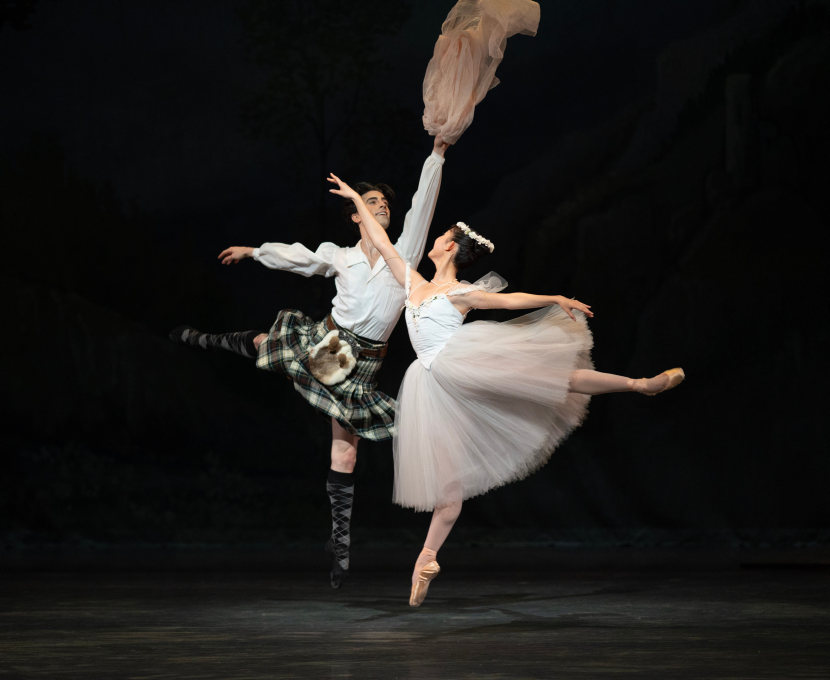
Central to the story is that James can’t touch the Sylph without harming her. “James wants to be physical with [the Sylph], but the one rule is that he can’t touch her or, like a butterfly, she dies,” explains Birkkjaer. “The scarf [that the witch Madge gives him] is a means to get everything you want, which doesn’t exist. The witch presents James with this tool for superiority, and he takes it, because he’s human.” When James places the magic scarf around the Sylph’s shoulders, she collapses and dies.
Taglioni conveniently ignored this rule when it came time for the central pas de deux, but Bournonville didn’t. His pas de deux is danced separately, which better suits the story, but may have resulted from more practical thinking. “He was a terrible partner,” says Birkkjaer, who dances the role of James and has stepped in to coach the ballet, with a laugh. “He did the main parts of his own ballets and wanted to be equal to the ballerina, so he would dance next to them.”
Bournonville’s La Sylphide made its way to SF Ballet in 1987. For Birkkjaer, who trained and danced with the Royal Danish Ballet before joining SF Ballet, the work feels like second nature. “You learn just by watching it every year,” he explains, noting that sharing details and musicality have been his focus in coaching. “When you are in the Royal Danish Ballet, by the time you get to your first rehearsal of a big part, you already know the musicality of it. Even the mime is on the music, and there’s just a certain way musically it needs to be done.”
Although the ballet is close to 200 years old, its central theme resonates. “The Sylph represents the most beautiful way of living life, in a sense,” he says. “That’s why this ballet is still relevant, because it speaks to human nature and wanting a better life or a more fulfilled self. It’s timeless.”