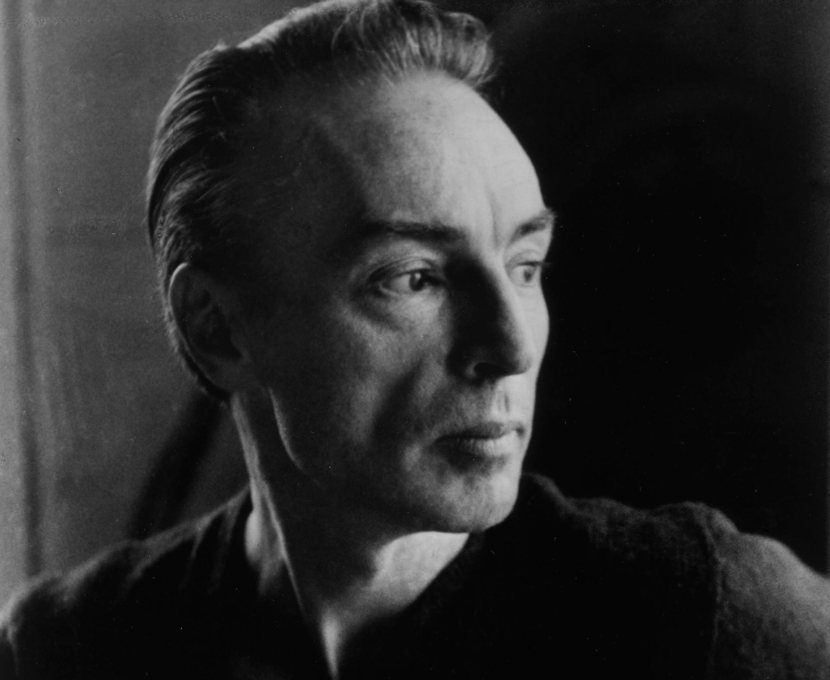
Lew Christensen, who served as SF Ballet’s Artistic Director from 1951 to 1984, was a pioneering force in shaping ballet on the West Coast. Before his tenure in San Francisco, Christensen was closely connected to George Balanchine, one of the most influential choreographers of the 20th century.
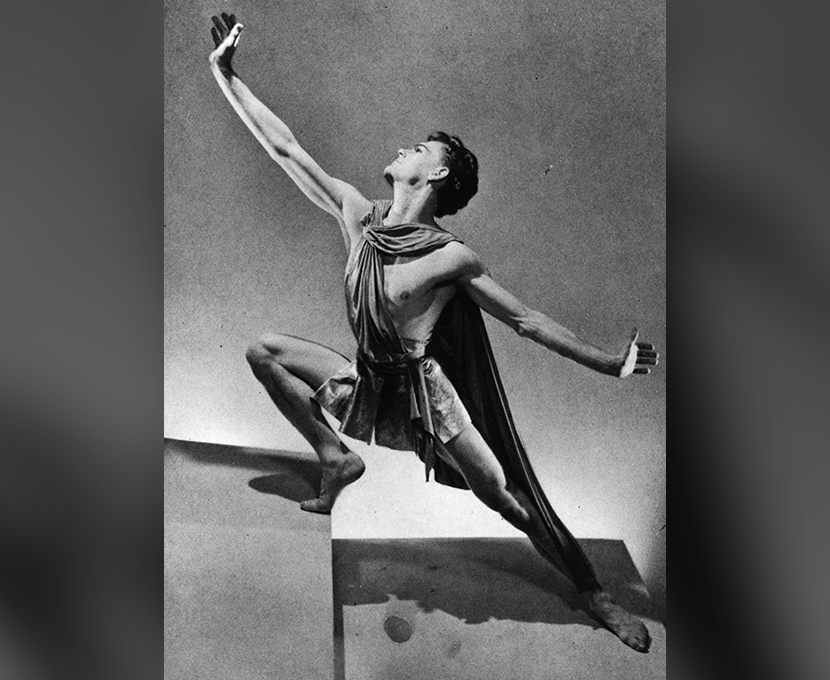
Christensen’s relationship with Balanchine began in the 1930s, when he joined the fledgling American Ballet Caravan, the company Balanchine founded with Lincoln Kirstein. He rose to prominence as a dancer, becoming the first American-born male to perform the title role in Balanchine’s landmark ballet, Apollo. This performance cemented Christensen’s importance as both an interpreter of Balanchine’s work and a model for the emergence of the American ballet dancer.
In 1945, Christensen was inducted into the military and posted in Germany until the end of World War II, when he returned to work with Balanchine for several seasons at the newly formed Ballet Society, which later became New York City Ballet, absorbing the choreographer’s modern, musical, and distinctly American sensibility. These years proved formative: Balanchine’s influence can be traced in Christensen’s clean, structured choreography and in his emphasis on musicality.
When Christensen returned west to join San Francisco Ballet, first as Associate Director in 1949 and then as Co-Director in 1951, he brought Balanchine’s influence with him, blending classical tradition with a distinctly modern American style. He expanded the Company’s repertory, nurtured new generations of dancers, and transformed SF Ballet into the first major ballet company established outside of New York.
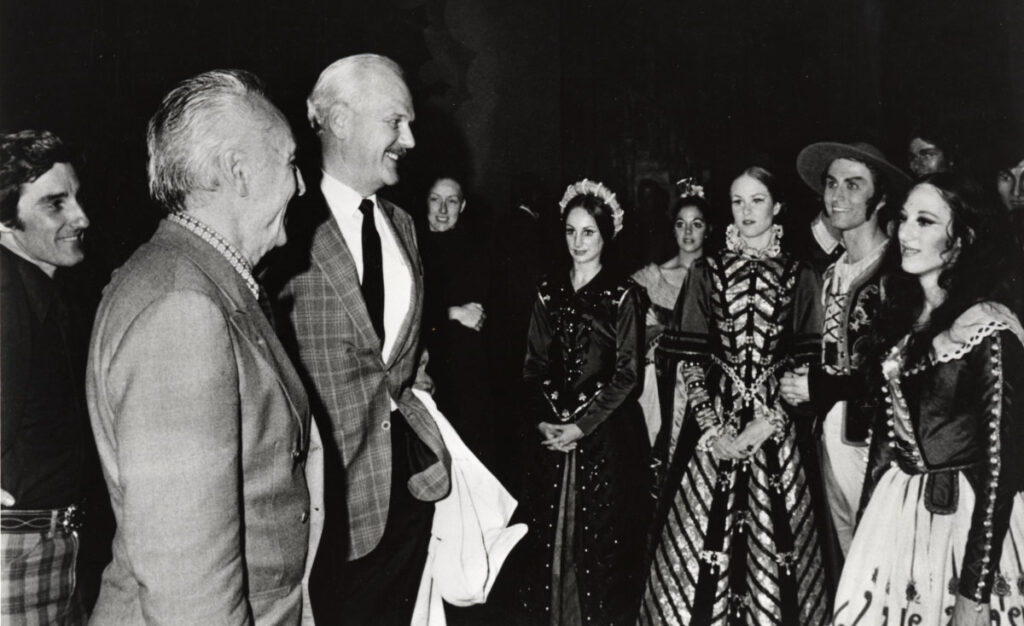
Michael Smuin, George Balanchine, Lew Christensen, and San Francisco Ballet dancers Lynda Meyer, Diana Weber, Mariana Alvarez, Gina Mess, John McFall, and Naomi Sorkin [image taken likely immediately following a performance], circa 1970s
Christensen’s career illustrates how Balanchine’s vision radiated beyond his own company. Their relationship not only shaped Christensen’s artistic voice but also left a lasting imprint on the development of dance in America, playing a major role in anchoring the San Francisco Ballet as a major cultural institution.
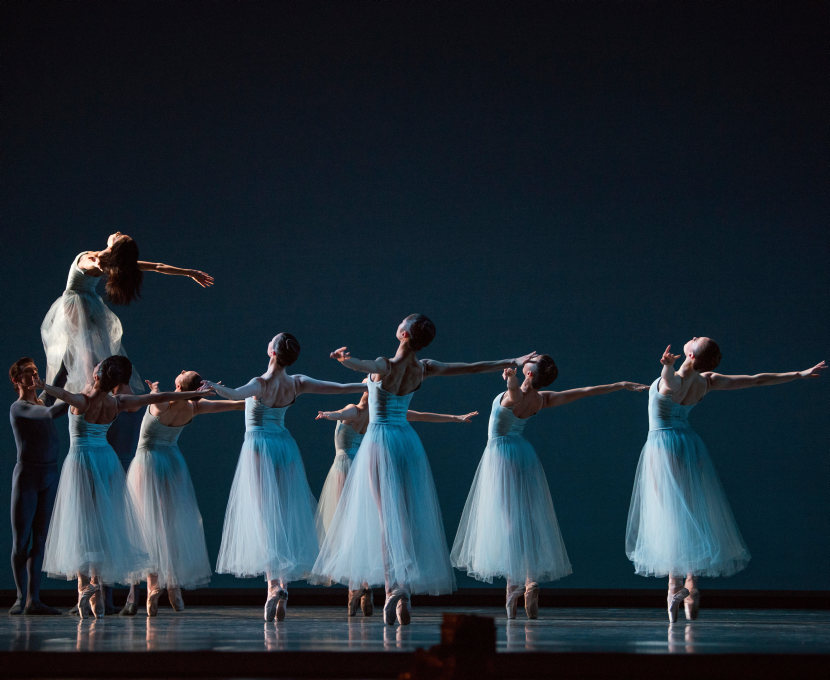
Artistic Director Tamara Rojo continues to honor this shared legacy, ensuring Balanchine’s work remains an integral part of our repertory. This Season, we celebrate the connection with an entire evening dedicated to Balanchine, reaffirming the enduring influence of his artistry on the Company and the broader American ballet tradition. Balanchine: Father of American Ballet, showcasing his evolution as a choreographer with Diamonds, Serenade, and Stars and Stripes, is onstage February 10–15.