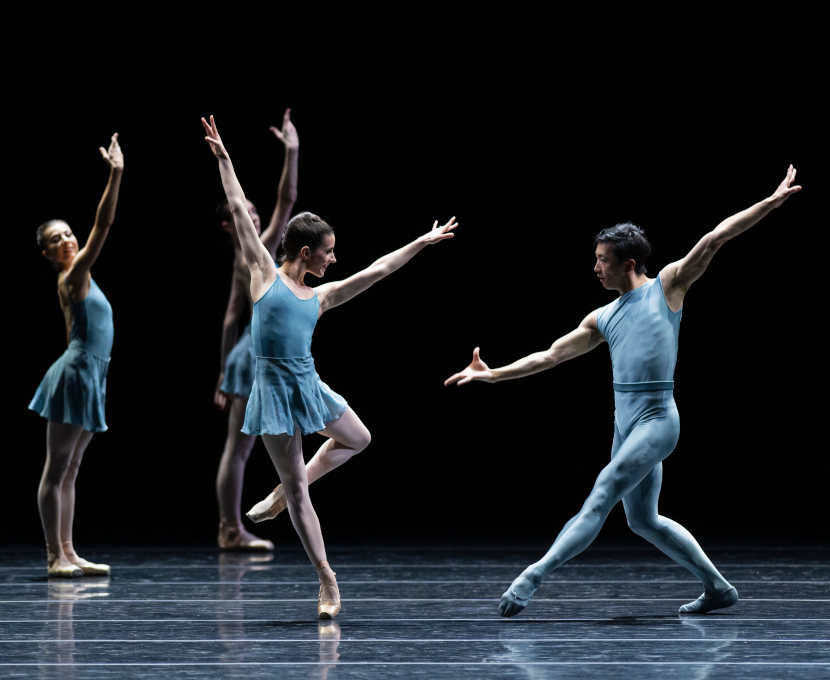
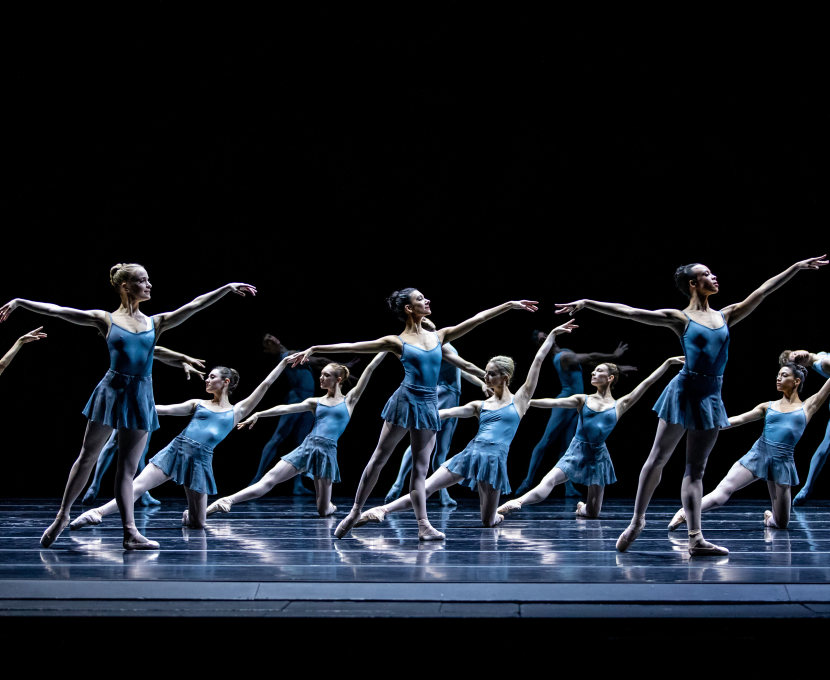
San Francisco Ballet’s evolution as a creative force in the dance world has been driven by its visionary leaders. Since 1952, just four Artistic Directors have carried the torch, each leaving a distinctive mark on the company. This year’s Spring Festival will honor their legacy, featuring choreography that represents their contribution to SF Ballet’s rich history.
Prologue
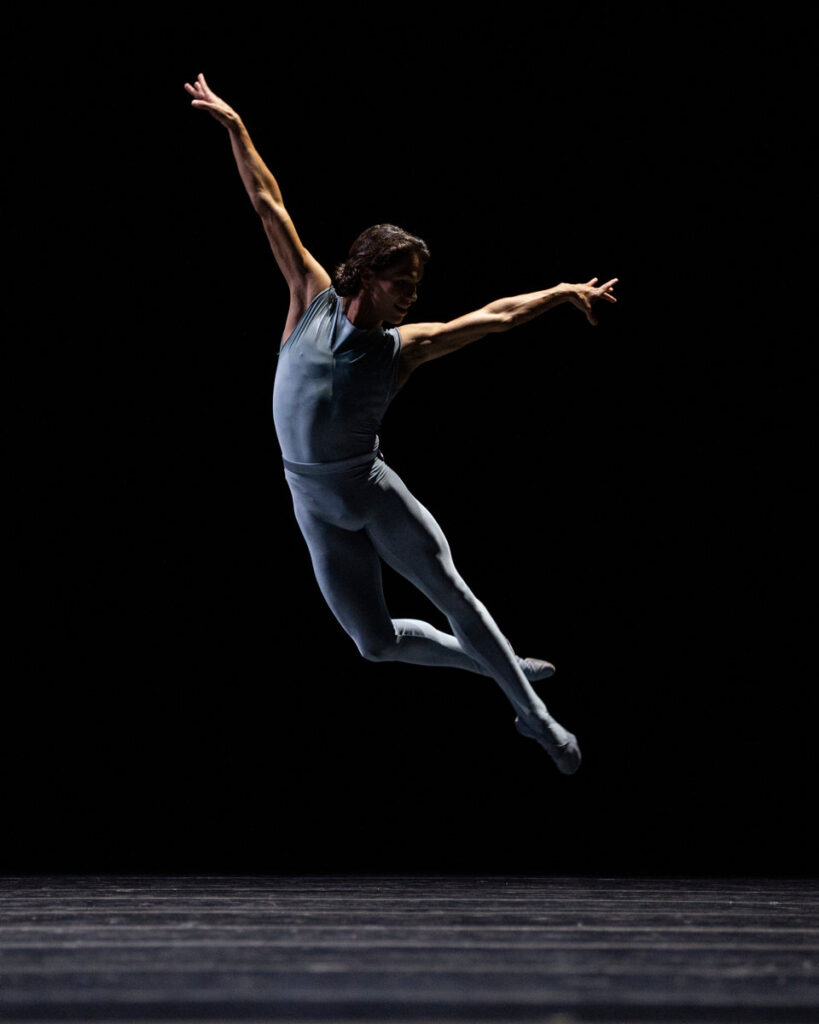
There is both music and mathematics in my family background, and I am certainly drawn to the ‘mathiness’ of both music and ballet. It was part of the appeal when I first heard Lindisfarne 1 by James Blake, which has become the first work of the three-part choreography The Blake Works. The music is defined by its virtually uncountable caesura: silences of indeterminate length. Blake asked if he should “regularize” these pauses for me, but I felt that would remove the tension from the work, and I wanted to keep its sense of respiration. Often with what I call my “tacet” or “a cappella” pieces, we develop a ‘breath score’, where the only acoustic element of the choreographic structure is deliberate patterns breathing. Here, though, I had to figure out a counting scheme that would enable dance and structured silence to cohere. The real challenge was to find four different counting strategies for each of the four sections. I played the music many hundreds of times, and it literally took me from 2011 until 2023 to find those structures that worked. Dancers have commented that they had acquired a kind of audio acuity which they said left them in a constant state of suspended anticipation during the dance.
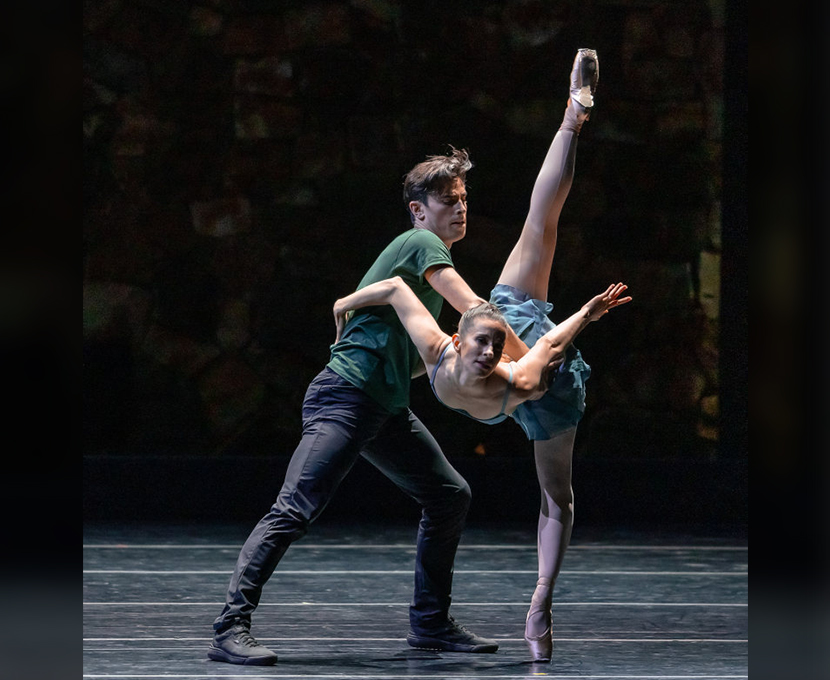
The Barre Project was conceived at the height of the pandemic as an homage to the legions of dancers who, while holding on to any available piece of domestic furniture, attempted to sustain their professional abilities with at-home barre exercises.
The project’s choreography contains no traditional arrangement of academic barre sequences. Rather, it is a rigorous display of the winding and unwinding kinetic logic that informs the most fundamental elements of classical ballet’s vocabulary. This foundational coordination is called “Epaulement” in ballet terminology and is the glue that unifies the balletic body’s attention to its many simultaneously moving parts.
Traditionally, the musical accompaniment for barre work has consisted of regularly metered excerpts of classical music repertoire. In this work, Blake also uses familiar time signatures to reframe diverse facets of classic composition in his densely counterpointed structures. Blake’s musical erudition allows him to navigate between traditional compositional conventions and contemporary genres with sophisticated ease, delighting and exciting performers and audiences alike.
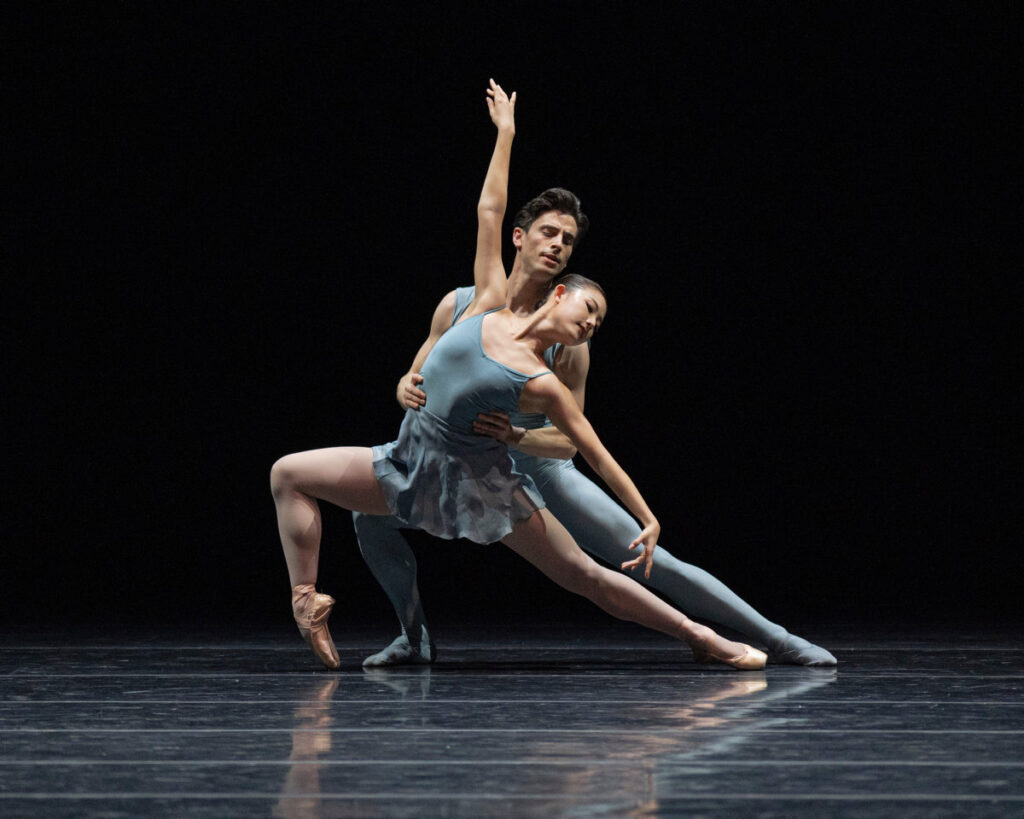
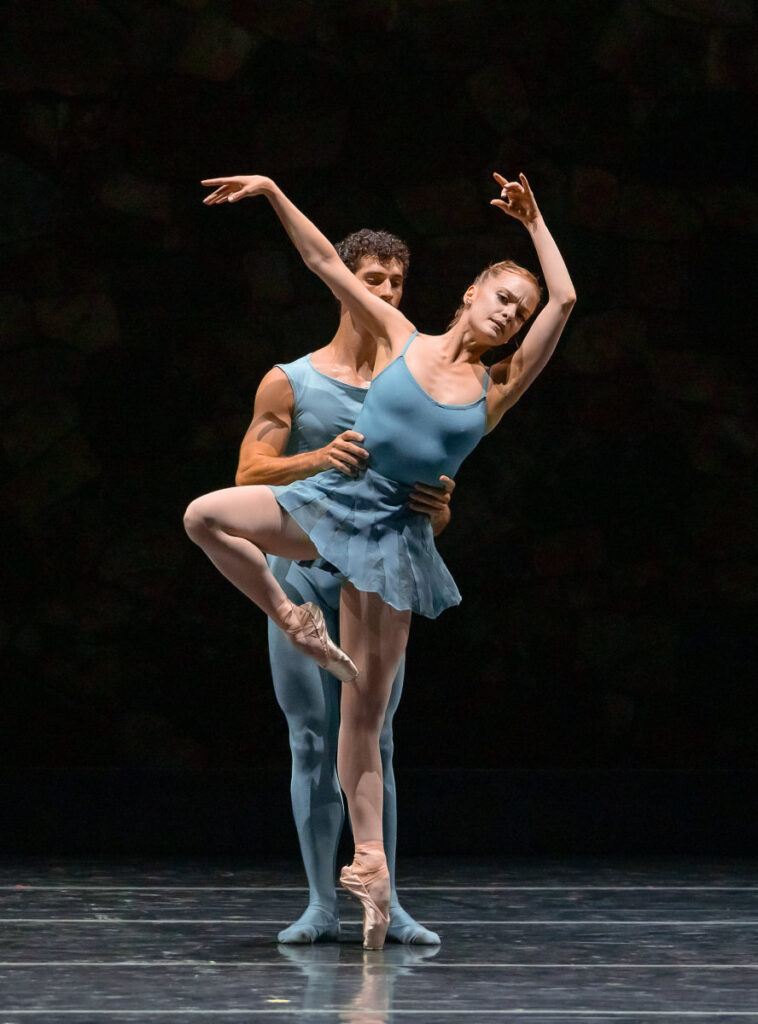
The final work of the evening is Blake Works I, performed in costumes that are reminiscent of the French ballet academy. It was created for the Paris Opera Ballet in 2016, and was the first work fashioned in the classical idiom after a hiatus from classical ballet for more than 15 years. While the work explores various facets of the strict academic tradition that underlies all ballet technique, Blake Works I also celebrates the delightful tension that arises through the introduction of choreographic exception to ballet’s conventional rules. The work deploys a distinctly historical approach to the genre, versus the analytical approach I used in a majority of the previous ballet-oriented works.
Blake Works I displays my deep affection for the language of ballet, and revives several iconic fragments from works of the genre’s great practitioners that had been deeply influential during my formative years.
Certain academic tropes that have the distinct imprint of the French style were introduced to me by Prima Ballerina and Director of the Paris Opera’s École de Danse Elizabeth Platel and the venerated teacher and transmitter of French “Batterie” Gilbert Mayer. These lessons were like being placed in an actual time machine, where a window to the formative state of the art suddenly appeared and allowed me a privileged and precious view of our common ground.