Program notes from Balanchine expert James Steichen
San Francisco Ballet’s evolution as a creative force in the dance world has been driven by its visionary leaders. Since 1952, just four Artistic Directors have carried the torch, each leaving a distinctive mark on the company. This year’s Spring Festival will honor their legacy, featuring choreography that represents their contribution to SF Ballet’s rich history.
Diamonds
Although most of George Balanchine’s career took place in the United States–as the co-founder and principal choreographer for the New York City Ballet–artistically he never left behind his native St. Petersburg, where he was born and first trained as a dancer.
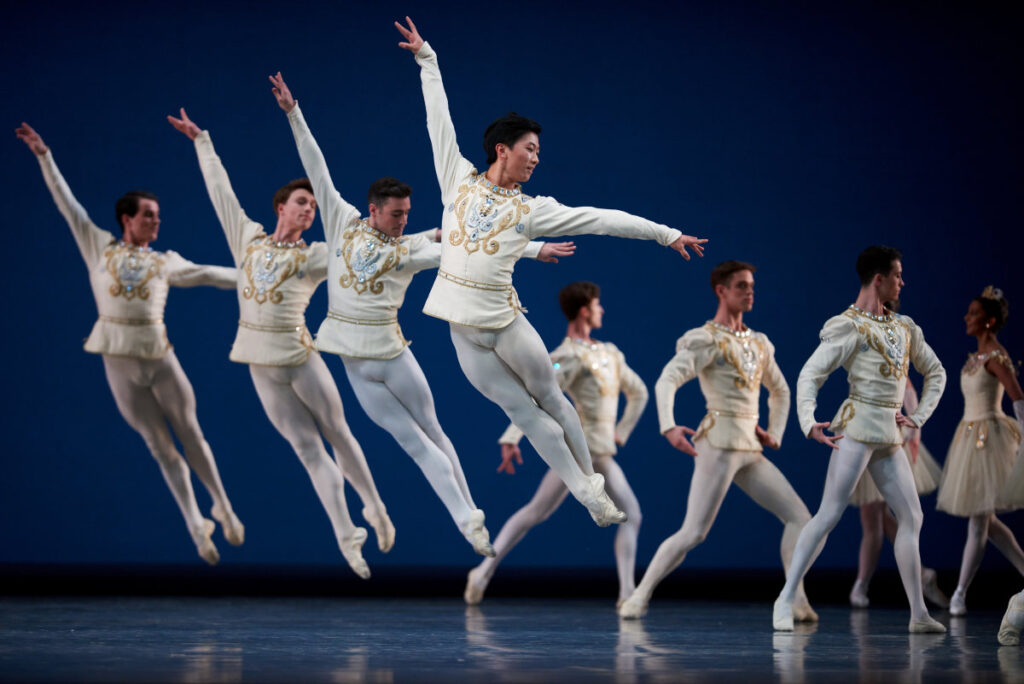
Diamonds is the third and final section of an evening-length ballet called Jewels that premiered in 1967 in New York City, and has often been performed in its entirety by San Francisco Ballet, for the first time in 2002 and most recently in 2021.
The ballet’s music is a symphony by Tchaikovsky (with the first movement omitted) and although this score was not originally composed to be danced to, Balanchine imbues it with all the regal classicism of beloved works such as Nutcracker and Swan Lake. Unlike these narrative ballets, however, Diamonds does not have any explicit story, allowing the dancers’ artistry itself to take center stage.
George Balanchine came to the United States in 1933, arriving in New York City the same day as Albert Einstein. They, along with many other emigrant artists and intellectuals, were seeking refuge in America amid rising threats of violence and warfare in Western Europe.
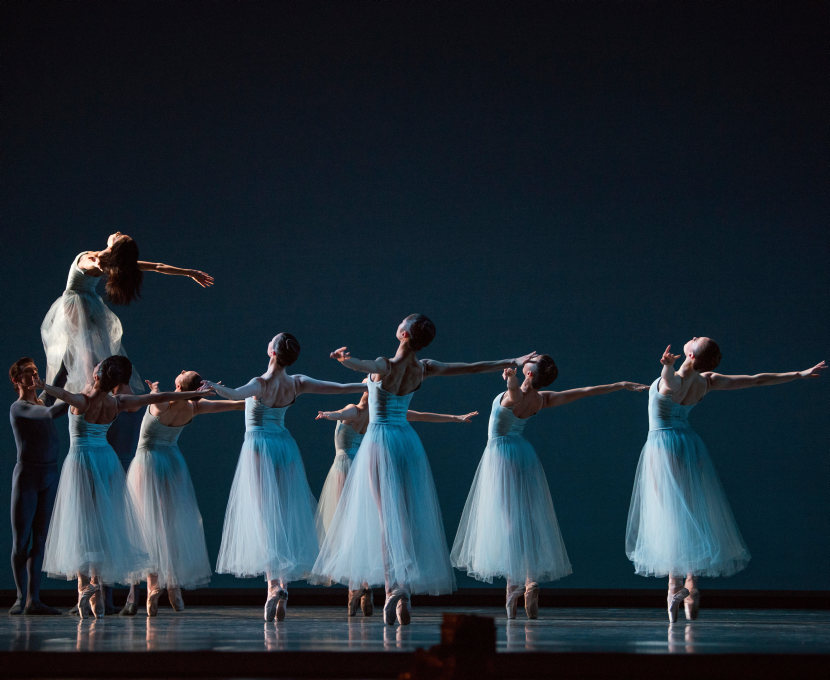
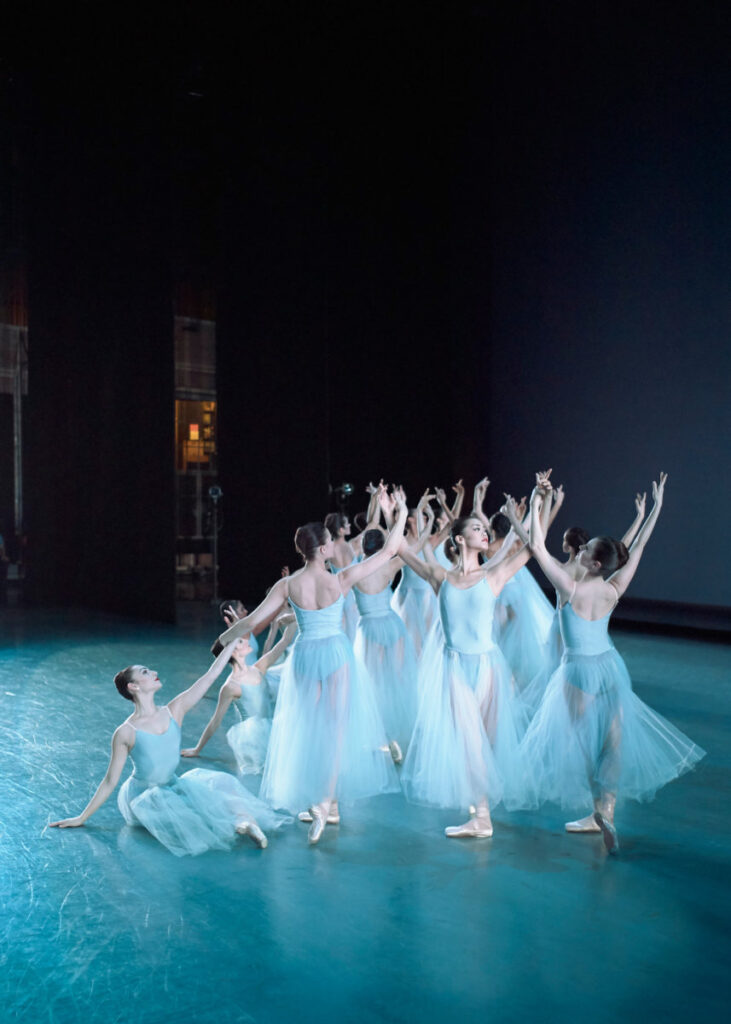
Serenade was the first completely new ballet created by Balanchine after his arrival in America, and was first performed at a 1934 outdoor June performance in Westchester County, New York, which had to be canceled and rescheduled for the next day due to a sudden rainstorm.
Since this inauspicious beginning, Serenade–typically pronounced with a long “a,” rhyming with “tapenade”–has become one of Balanchine’s most beloved and often performed works, and is one of the few ballets from his early decades in America to still be performed today. Like Diamonds, it also does not have any explicit plot, telling its story through music and dance alone.
Balanchine became a naturalized United States citizen in 1939 and was intensely patriotic about his adopted homeland. While he was well-known for his interest in cowboy culture, often sporting western-style shirts and bolo ties, Stars and Stripes offers a different artistic tribute to America.
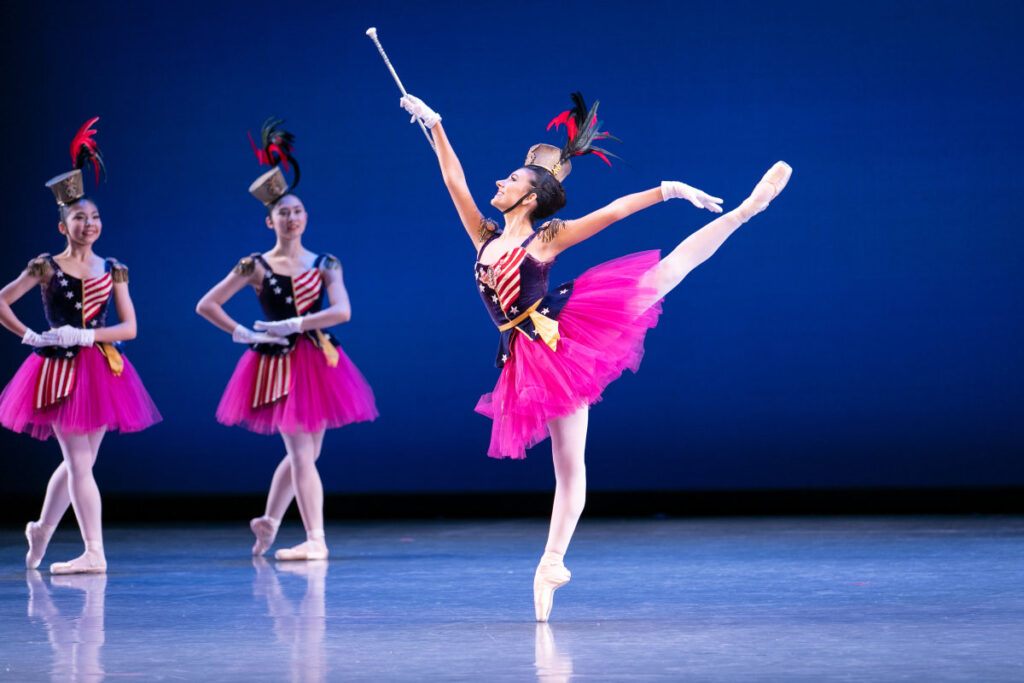
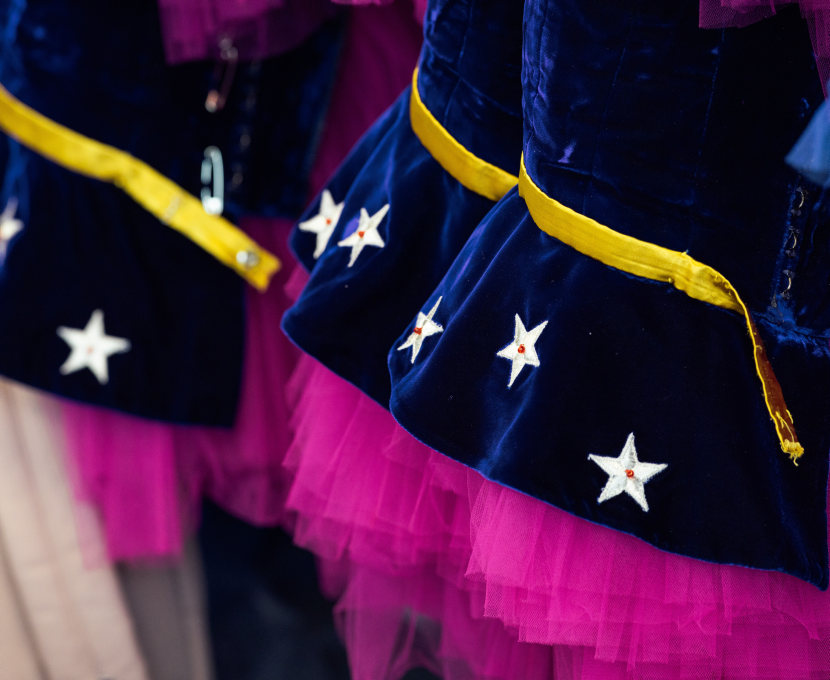
Premiered in 1958 during the height of the Cold War, this “Ballet in Five Campaigns” is set to the music of American composer John Philip Sousa, whose marches instantly conjure up images of Fourth of July fireworks and memories of other national celebrations. Its joyous spectacle is also a reminder of the sense of sophisticated showmanship that Balanchine cultivated throughout his career, including his work as a choreographer for Broadway musicals and Hollywood.
While distinctly American in its look and feel, Stars and Stripes is every bit as grounded in classical ballet technique as Diamonds and Serenade, and is a virtuosic showcase for its entire ensemble, especially its two principal dancers, who are given the nicknames “Liberty Bell” and “El Capitan.” Befitting its political ethos, Balanchine dedicated the work to the memory of Fiorello LaGuardia, who was an ardent champion of the arts during his tenure as mayor of New York City.
About the author: James Steichen is the author of Balanchine and Kirstein’s American Enterprise and a former Visiting Scholar for San Francisco Ballet. He has given lectures for the School of American Ballet and was a featured guest on the podcast The Turning: Room of Mirrors. His writing has appeared in the Times Literary Supplement, The Nation, and the Chronicle of Higher Education. He works at Stanford University and lives in San Francisco.